Cawthorne-Cooksey Exercises PDF: A Comprehensive Guide
Cawthorne-Cooksey exercises, foundational in vestibular rehabilitation, are often found in PDF guides, offering structured programs to compensate for inner ear issues and improve balance.
These protocols, dating back to 1946, aim to retrain the brain, utilizing visual and proprioceptive cues for postural stability, as detailed in numerous resources.
Accessing reliable PDF resources is crucial for safe and effective implementation, supporting individuals with labyrinth injuries, post-surgery recovery, or neurological conditions.
Cawthorne-Cooksey Exercises (CCEs) represent a cornerstone of vestibular rehabilitation therapy (VRT), designed to alleviate debilitating symptoms stemming from inner ear disorders and neurological conditions. Developed in 1946 by Cawthorne and Cooksey, these exercises aren’t merely a set of movements; they are a systematic approach to neuroplasticity, prompting the central nervous system to adapt and compensate for impaired vestibular function.
The core principle revolves around challenging the brain with specific movements, encouraging it to prioritize and interpret signals from alternative sensory inputs – namely, vision and proprioception – to maintain balance and spatial orientation. PDF guides containing CCE protocols are widely available, offering structured programs for patients and clinicians alike. These guides typically detail a series of exercises targeting eye movements, head motions, and balance control, progressing in difficulty as the patient improves.
Understanding the foundational concepts of CCEs is vital for effective implementation. They are frequently prescribed following labyrinth injury, post-surgical interventions affecting the vestibular system, or in cases of head trauma. Furthermore, their application extends to managing balance deficits associated with conditions like Parkinson’s Disease, enhancing quality of life and functional independence.
Historical Context: Cawthorne & Cooksey’s Original Work (1946)
In 1946, Cawthorne and Cooksey published their groundbreaking work addressing the challenges faced by pilots experiencing balance disturbances post-flight. Recognizing that vestibular dysfunction often resulted from these experiences, they pioneered a novel rehabilitation approach focused on retraining the central nervous system. Their initial observations centered on the brain’s remarkable capacity to adapt and recalibrate when faced with altered sensory input.
Prior to their research, treatment options for vestibular disorders were limited. Cawthorne and Cooksey’s exercises weren’t designed to “cure” the underlying problem, but rather to facilitate compensation. They meticulously crafted a series of movements – eye, head, and balance exercises – to stimulate alternative sensory pathways and encourage the brain to develop new strategies for maintaining equilibrium.
Early PDF documentation of these exercises was scarce, relying heavily on clinical notes and word-of-mouth dissemination. However, their efficacy quickly gained recognition, establishing CCEs as the foundational protocol for vestibular rehabilitation, a legacy that continues to influence modern practice and the content found in contemporary PDF guides.
What are Cawthorne-Cooksey Exercises?
Cawthorne-Cooksey Exercises (CCEs) are a specific set of movements designed to rehabilitate vestibular dysfunction, commonly detailed in PDF exercise guides. These exercises aren’t a singular routine, but a progressive protocol encompassing eye movements, head movements, and balance challenges – both static and dynamic. The core principle involves systematically exposing the patient to movements that provoke their symptoms, gradually increasing the difficulty.
Typically, a CCE program begins with simple eye exercises, progressing to more complex head movements, and culminating in balance activities performed in various positions. Many PDF resources categorize exercises by difficulty level, allowing for personalized progression. The goal is to encourage the brain to substitute diminished vestibular input with information from visual and proprioceptive systems.
CCEs are considered a cornerstone of vestibular rehabilitation, offering a structured approach to retraining the central nervous system and improving postural stability, as evidenced by their continued presence in modern clinical practice and readily available PDF documentation.
The Core Principles of VRT & CCE
Vestibular Rehabilitation Therapy (VRT), of which Cawthorne-Cooksey Exercises (CCEs) are a foundational component, centers on neuroplasticity – the brain’s ability to reorganize itself. The primary principle is to facilitate central compensation for impaired vestibular function. PDF guides outlining CCEs emphasize habituation, where repeated exposure to symptom-provoking movements reduces the brain’s sensitivity to conflicting signals.
Another core tenet is enhancing the utilization of alternative sensory inputs, namely vision and proprioception, to maintain balance and spatial orientation. CCEs, as detailed in accessible PDF resources, actively encourage this sensory substitution. The exercises aren’t about ‘fixing’ the vestibular system, but rather teaching the brain to interpret and utilize available information more effectively.
Ultimately, VRT and CCEs aim to create new, automatic postural and gaze control strategies, improving stability and reducing dizziness, all achievable through consistent practice guided by comprehensive PDF protocols.
How CCEs Retrain the Central Nervous System
Cawthorne-Cooksey Exercises (CCEs), often accessed through detailed PDF guides, fundamentally retrain the central nervous system by challenging it with specific movements. These exercises induce a controlled level of sensory conflict, forcing the brain to adapt and recalibrate its interpretation of spatial orientation and balance. Repeated practice, as outlined in PDF protocols, strengthens new neural pathways.
The brain learns to prioritize reliable sensory information – visual and proprioceptive cues – while downplaying the inaccurate signals from the impaired vestibular system. This process isn’t immediate; consistent engagement with CCEs, guided by a PDF resource, is crucial for lasting neurological changes.
Essentially, CCEs promote neuroplasticity, enabling the brain to create new ‘rules’ for maintaining equilibrium, ultimately reducing dizziness and improving postural control, as demonstrated in various clinical studies detailed in available PDF documentation.
The Role of Sensory Reorganization
Sensory reorganization is central to the effectiveness of Cawthorne-Cooksey Exercises (CCEs), often detailed in comprehensive PDF guides. When the vestibular system is compromised, the brain relies more heavily on vision and proprioception – the sense of body position – to maintain balance. CCEs, as presented in PDF protocols, actively facilitate this shift.
These exercises aren’t simply about strengthening muscles; they’re about teaching the brain to interpret and integrate information from different sensory sources more efficiently. The PDF resources emphasize exercises that challenge visual tracking, head movements, and postural stability, prompting the brain to create new neural connections.
This reorganization allows for the automatic processing of vestibular stimulation patterns, ultimately improving balance and reducing symptoms, as highlighted in research accessible through PDF reports and clinical guidelines.
Benefits of Cawthorne-Cooksey Exercises
Cawthorne-Cooksey Exercises (CCEs), readily available in detailed PDF formats, offer a multitude of benefits for individuals experiencing vestibular dysfunction. These exercises, as outlined in PDF guides, are designed to improve balance, postural stability, and overall quality of life. A primary benefit is the central nervous system’s ability to compensate for abnormal vestibular inputs.
PDF resources demonstrate how CCEs enhance alternative sensory inputs like vision and proprioception, fostering new gaze and postural control strategies. This leads to significant improvements in reducing dizziness and vertigo symptoms, as documented in systematic reviews accessible as PDF downloads.
Furthermore, consistent practice, guided by PDF protocols, can empower individuals to regain confidence and participate more fully in daily activities, ultimately enhancing their well-being and independence.
Improving Vestibular Symptoms
Cawthorne-Cooksey Exercises (CCEs), detailed in comprehensive PDF guides, directly target the reduction of debilitating vestibular symptoms. These exercises work by retraining the central nervous system to interpret and compensate for faulty signals from the inner ear, a process clearly illustrated within PDF exercise protocols.
PDF resources emphasize that CCEs don’t necessarily cure the underlying vestibular issue, but rather equip the brain with alternative strategies to maintain balance and reduce sensations of dizziness and vertigo. The systematic approach, found in downloadable PDFs, focuses on habituating to movements that provoke symptoms.
By repeatedly exposing the brain to these movements, CCEs, as presented in PDF formats, facilitate a decrease in sensitivity and an improvement in overall vestibular function, leading to a noticeable reduction in symptom severity.
Enhancing Balance and Postural Stability
Cawthorne-Cooksey Exercises (CCEs), readily available in detailed PDF guides, are specifically designed to enhance both balance and postural stability. These exercises, outlined in PDF resources, challenge the body’s balance mechanisms, prompting the central nervous system to reorganize and improve its control over posture.
PDF protocols emphasize the importance of incorporating both static and dynamic balance exercises, progressively increasing the difficulty to challenge the system. This systematic approach, detailed in PDFs, strengthens the muscles responsible for maintaining balance and improves proprioception – the body’s awareness of its position in space.
Through consistent practice using PDF-guided routines, individuals can experience a significant improvement in their ability to maintain balance during everyday activities, reducing the risk of falls and enhancing overall stability.
Improving Quality of Life
Cawthorne-Cooksey Exercises (CCEs), conveniently accessible through comprehensive PDF guides, extend beyond symptom management to significantly improve overall quality of life. By addressing vestibular dysfunction, these exercises – detailed in PDF resources – reduce dizziness and imbalance, enabling greater participation in daily activities.
PDF protocols facilitate a return to hobbies, social engagements, and work, fostering a sense of independence and reducing the limitations imposed by vestibular disorders. The exercises promote confidence in movement, lessening anxiety associated with potential falls or instability, as outlined in PDF materials.
Ultimately, consistent engagement with PDF-guided CCEs empowers individuals to regain control over their lives, enhancing their physical, emotional, and social well-being, leading to a more fulfilling and active lifestyle.

Specific Exercises Included in the Protocol
Cawthorne-Cooksey Exercises (CCEs), detailed in readily available PDF guides, encompass a systematic approach to vestibular rehabilitation. These PDF resources typically outline three core exercise categories: eye movements, head movements, and balance exercises.
PDF guides demonstrate eye movement drills, like tracking visual targets, to improve gaze stability. Head movements, including rotations and tilts, are prescribed to challenge the vestibular system. Static and dynamic balance exercises, often illustrated in PDFs, progress from simple stances to more complex activities.
These PDF protocols emphasize gradual progression and repetition, ensuring the central nervous system adapts. The specific exercises and their intensity are often tailored to individual needs, as detailed within comprehensive PDF exercise programs.
Eye Movement Exercises
Cawthorne-Cooksey Exercise (CCE) PDF guides dedicate a significant section to eye movement drills, crucial for stabilizing vision during head motion. These exercises aim to dissociate visual input from head movements, retraining the brain to maintain a clear focus.
PDF resources commonly feature exercises like smooth pursuit – tracking a moving target horizontally and vertically. Saccadic movements, rapidly shifting gaze between fixed points, are also prominent. Fixation exercises, maintaining focus on a stationary object during head turns, are frequently included in PDF protocols.
Detailed PDF instructions emphasize slow, controlled movements, gradually increasing speed and complexity. These exercises, as outlined in PDF guides, help reduce visual vertigo and improve gaze control, essential components of vestibular rehabilitation.
Head Movement Exercises
Cawthorne-Cooksey Exercise (CCE) PDF guides extensively detail head movement exercises, forming a cornerstone of vestibular rehabilitation. These drills challenge the vestibular system to adapt to motion, reducing dizziness and improving balance. PDF resources typically begin with simple movements, like head rotations – nodding “yes” and shaking “no” – performed slowly and deliberately.
More advanced exercises, detailed in PDF protocols, include head tilts (ear to shoulder) and head rolls (chin to chest). These are often combined with eye movements to increase complexity. PDF guides emphasize performing these exercises in a safe environment, initially seated, then progressing to standing.
The goal, as explained in CCE PDF materials, is to provoke symptoms initially, then allow the brain to habituate and suppress them, ultimately restoring normal head and gaze stability.
Balance Exercises – Static & Dynamic
Cawthorne-Cooksey Exercise (CCE) PDF resources dedicate significant attention to balance training, categorized into static and dynamic components. Static exercises, detailed in PDF guides, involve maintaining a stable posture – standing with feet together, then progressively narrowing the base of support. PDF instructions often suggest performing these near a stable surface for safety.
Dynamic exercises, as outlined in CCE PDF protocols, introduce movement while maintaining balance. Examples include weight shifting, tandem stance (heel-to-toe), and walking with head turns. These progressively challenge the vestibular system and proprioceptive feedback.
PDF guides emphasize gradual progression, starting with eyes open and progressing to eyes closed to increase difficulty. The aim, as described in these resources, is to enhance postural stability and reduce fall risk through sensory re-organization.
Cawthorne-Cooksey Exercises for Different Conditions
Cawthorne-Cooksey Exercise (CCE) PDF materials frequently adapt protocols for specific conditions. PDF guides detail modifications for vestibular dysfunction, including labyrinth injury, post-surgical rehabilitation, and head trauma recovery, emphasizing compensation for impaired vestibular input.

Notably, CCE PDF resources highlight application in Parkinson’s Disease, focusing on improving balance and quality of life through targeted exercises. These PDF guides often suggest adjustments to exercise intensity and duration based on individual patient needs and symptom severity.
The core principle, as explained in these PDF documents, remains consistent: retraining the central nervous system to utilize alternative sensory inputs (visual, proprioceptive) for postural control. Accessing condition-specific PDFs ensures tailored exercise programs.
Vestibular Dysfunction & Labyrinth Injury
Cawthorne-Cooksey Exercise (CCE) PDF guides are particularly valuable for individuals experiencing vestibular dysfunction and labyrinth injuries. These PDF resources detail exercises designed to compensate for reduced or distorted signals from the inner ear, promoting central nervous system adaptation;
PDF materials emphasize exercises targeting gaze stabilization, head movement control, and balance, crucial for mitigating dizziness and improving spatial orientation. They often include progressive exercise sequences, starting with simple movements and gradually increasing complexity.
The PDFs explain how CCEs facilitate sensory reorganization, enhancing reliance on visual and proprioceptive cues. Accessing a comprehensive PDF guide ensures a structured approach to rehabilitation, aiding recovery from acute injury or chronic dysfunction.
Post-Surgery Rehabilitation
Cawthorne-Cooksey Exercise (CCE) PDF guides are instrumental in post-surgery vestibular rehabilitation, particularly following procedures like mastoidectomy or cochlear implantation. These PDF resources provide tailored exercise programs to address post-operative dizziness and balance deficits.
PDF materials outline a phased approach, beginning with gentle movements and progressing as tolerated, emphasizing gaze stabilization and head repositioning exercises. They often include specific instructions regarding timing and frequency, crucial for optimal recovery.
The PDFs highlight the importance of retraining the central nervous system to interpret altered vestibular input, promoting adaptation and reducing reliance on the affected ear. Accessing a detailed PDF guide empowers patients to actively participate in their rehabilitation journey, accelerating functional recovery.
Head Injury Rehabilitation
Cawthorne-Cooksey Exercise (CCE) PDF guides play a vital role in rehabilitating vestibular dysfunction stemming from head injuries, including concussions and traumatic brain injuries. These PDF resources offer structured programs to address dizziness, imbalance, and visual disturbances commonly experienced post-injury.
PDF materials emphasize exercises designed to enhance sensory reorganisation, improving the brain’s ability to compensate for disrupted vestibular signals. They often incorporate eye movement, head movement, and balance exercises, progressing in difficulty as the patient improves.
A comprehensive PDF guide will detail how CCEs facilitate the development of new postural control strategies, promoting stability and reducing fall risk. Utilizing these PDF resources, patients can actively participate in regaining functional independence and improving their quality of life after a head injury.
Parkinson’s Disease & Balance Improvement
Cawthorne-Cooksey Exercise (CCE) PDF guides are increasingly utilized as a complementary therapy for individuals with Parkinson’s Disease, focusing on mitigating balance impairments. These PDF resources provide structured exercise protocols designed to address the postural instability often experienced as the disease progresses.
PDF materials highlight how CCEs support the reorganization of sensory information, enabling new vestibular stimulation patterns to become automatic, crucial for improving balance control. They typically include exercises targeting gaze stability, head movements, and dynamic balance challenges.
A well-designed PDF guide will outline a progressive exercise program, allowing patients to gradually improve their ability to maintain equilibrium and reduce the risk of falls. Utilizing these PDF resources, individuals with Parkinson’s can enhance their functional mobility and overall quality of life.
Implementing a Cawthorne-Cooksey Exercise Program
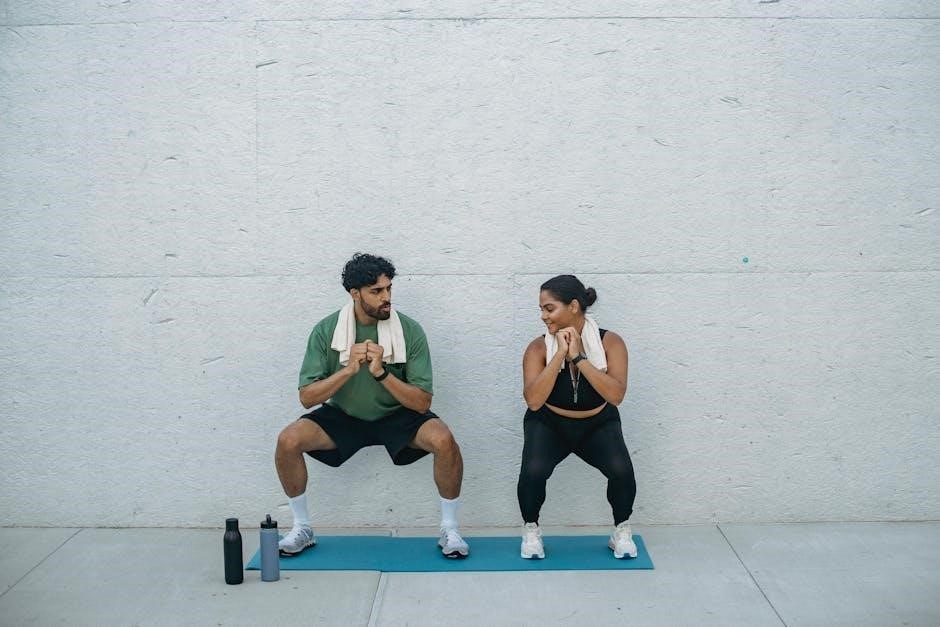
Cawthorne-Cooksey Exercise (CCE) PDF guides emphasize a structured approach to program implementation. These PDF resources typically detail a phased progression, starting with simpler exercises and gradually increasing complexity as the patient improves. Frequency is key; PDFs often recommend daily sessions for optimal results.
A comprehensive PDF will outline the duration of each exercise and the number of repetitions, alongside clear instructions and illustrations. It’s crucial to follow the guidance within the PDF to avoid overexertion or incorrect form. Progression should be guided by symptom response and tolerance.
PDF materials also stress the importance of a safe environment, minimizing fall risks during exercise. Consistent adherence to the program, as detailed in the PDF, is vital for achieving lasting improvements in balance and vestibular function.
Frequency and Duration
Cawthorne-Cooksey Exercise (CCE) PDF guides consistently recommend daily performance for optimal neurological adaptation. Most PDF resources suggest performing exercises once or twice daily, prioritizing consistency over lengthy individual sessions. The duration of each exercise within a session typically ranges from 30 seconds to several minutes, depending on the specific movement and individual tolerance.
PDF materials often outline a phased approach, starting with shorter durations and gradually increasing as symptoms improve. A typical program, as detailed in a comprehensive PDF, might involve 10-15 repetitions of each exercise. It’s crucial to listen to your body and avoid pushing through significant discomfort.
The PDF should emphasize that adherence to this frequency and duration is vital for retraining the central nervous system and achieving lasting benefits.
Progression of Exercises
Cawthorne-Cooksey Exercise (CCE) PDF guides emphasize a systematic progression to challenge the recovering vestibular system. Initial stages, detailed in most PDF resources, focus on slow, controlled movements, prioritizing accuracy over speed. As tolerance increases, the PDF will suggest increasing the speed and range of motion.
A key principle outlined in PDF materials is to gradually introduce complexity. This might involve progressing from static balance exercises to dynamic ones, or adding visual distractions during head movements. Many PDF guides advocate for incorporating functional movements, simulating everyday activities.
The PDF should clearly state that progression is individualized, based on symptom response. If symptoms worsen, the PDF advises returning to a previous, more comfortable level. Consistent monitoring and adjustments, guided by a PDF’s recommendations, are crucial for successful rehabilitation.
Safety Precautions & Considerations
Cawthorne-Cooksey Exercise (CCE) PDF guides consistently highlight the importance of safety. Individuals should consult a healthcare professional before starting, especially with pre-existing conditions. A PDF will often advise performing exercises in a safe environment, near a stable surface to prevent falls.
PDF resources emphasize listening to your body; stop if dizziness, nausea, or pain occur. Avoid performing exercises when fatigued or unwell. Many PDFs recommend having someone present during initial sessions, particularly for balance exercises.
The PDF should caution against pushing too hard, too soon. Gradual progression is key. Be mindful of visual surroundings to minimize the risk of collisions. A comprehensive PDF will also detail when to seek professional help if symptoms persist or worsen despite adherence to the program.
Finding Cawthorne-Cooksey Exercises PDF Resources
Locating reliable Cawthorne-Cooksey Exercises PDF resources requires careful consideration. A starting point is searching reputable medical websites, university health centers, and professional audiology or neurology associations. Many hospitals and clinics offer downloadable PDF guides for patients undergoing vestibular rehabilitation.
PDF search terms should be specific: “Cawthorne-Cooksey exercises protocol,” “vestibular rehabilitation exercises PDF,” or “balance exercises PDF.” Exercise caution with general internet searches, verifying the source’s credibility before downloading. Look for PDFs authored by qualified healthcare professionals.
Ensure the PDF includes clear instructions, illustrations, and safety guidelines. A good resource will detail exercise progression and modifications. Always prioritize PDFs from trusted sources to guarantee accuracy and safety of the prescribed exercises.
Reliable Sources for Exercise Guides
When seeking Cawthorne-Cooksey Exercises PDF guides, prioritize sources with established medical authority. ENT (Ear, Nose, and Throat) reference materials, like those from healthcare systems, often provide validated protocols. University hospital websites specializing in audiology or neurology are excellent resources, offering patient education materials in PDF format.
Professional organizations such as the American Academy of Otolaryngology – Head and Neck Surgery and the Vestibular Disorders Association frequently link to or host reliable exercise guides. Look for PDFs created by licensed physical therapists or audiologists specializing in vestibular rehabilitation.
Government health websites, like the NIH (National Institutes of Health), may also offer links to credible resources. Always verify the date of publication to ensure the information is current and aligned with best practices.

What to Look for in a PDF Guide
A comprehensive Cawthorne-Cooksey Exercises PDF guide should clearly detail each exercise with precise instructions and illustrations. Look for a progression system, outlining how to increase difficulty as symptoms improve. The guide must emphasize the importance of performing exercises consistently for optimal results, detailing frequency and duration.
Essential components include safety precautions, advising when to stop and seek professional help. A good guide will explain the underlying principles of VRT (Vestibular Rehabilitation Therapy) and how CCEs retrain the central nervous system.
Ensure the PDF specifies adaptations for different conditions – post-surgery, head injury, or Parkinson’s – and includes a disclaimer stating it’s not a substitute for professional medical advice.
Potential Risks and When to Seek Professional Help
While generally safe, Cawthorne-Cooksey Exercises can initially exacerbate symptoms like dizziness or nausea. This is often a sign of central nervous system adaptation, but requires monitoring. A PDF guide should clearly state this possibility and advise starting slowly.
Seek professional help if symptoms worsen significantly, persist beyond a reasonable timeframe, or are accompanied by new neurological symptoms like blurred vision, weakness, or speech difficulties.
Individuals with pre-existing medical conditions, particularly cardiovascular or musculoskeletal issues, should consult a doctor before starting. Stop immediately and consult a healthcare professional if experiencing severe pain or discomfort during exercises. Self-treating based solely on a PDF is not recommended; professional guidance is crucial for personalized programs.